Pharmaceutical companies are experimenting with pharming – genetically engineering plants to produce useful and valuable drugs. Currently undergoing field trials are tomato plants that produce a vaccine for Alzheimer’s disease and potatoes that immunise against hepatitis B. Many more plant-made-pharmaceuticals are being developed in laboratories around the world.
However, the techniques employed to insert genes into plants are within reach of the amateur…and the criminal. Policing Genes speculates that, like other technologies, genetic engineering will also find a use outside the law, with innocent-looking garden plants being modified to produce narcotics and unlicensed pharmaceuticals.
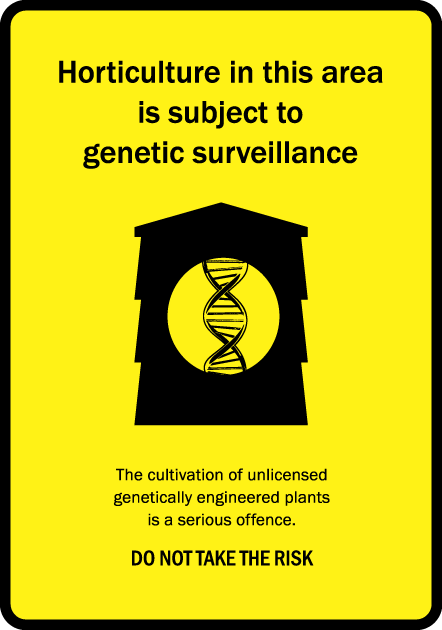
The genetics of the plants in your garden or allotment could become a police matter…
Commissioned by the Engineering & Physical Sciences Research Council as part of the IMPACT Project, with the UCL Centre for Security & Crime Science.
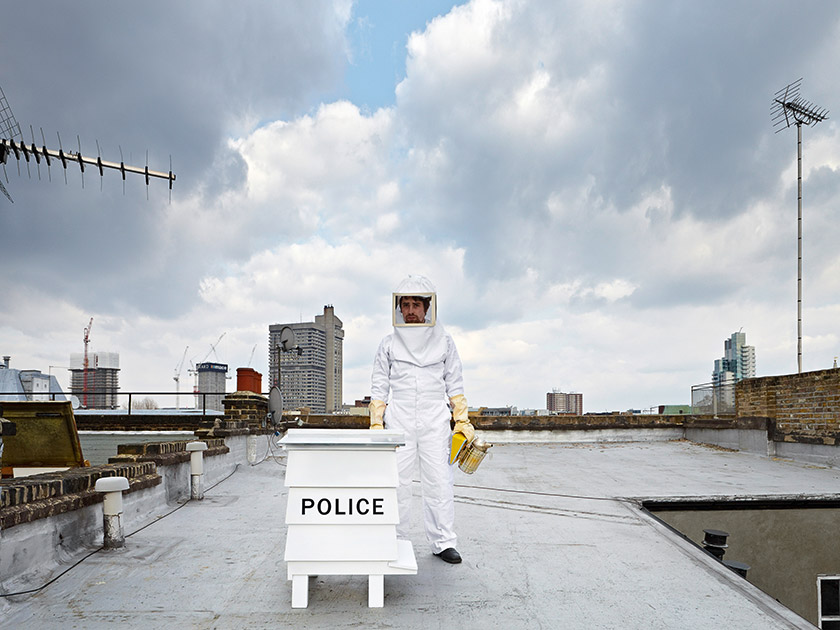
Photograph: Theo Cook
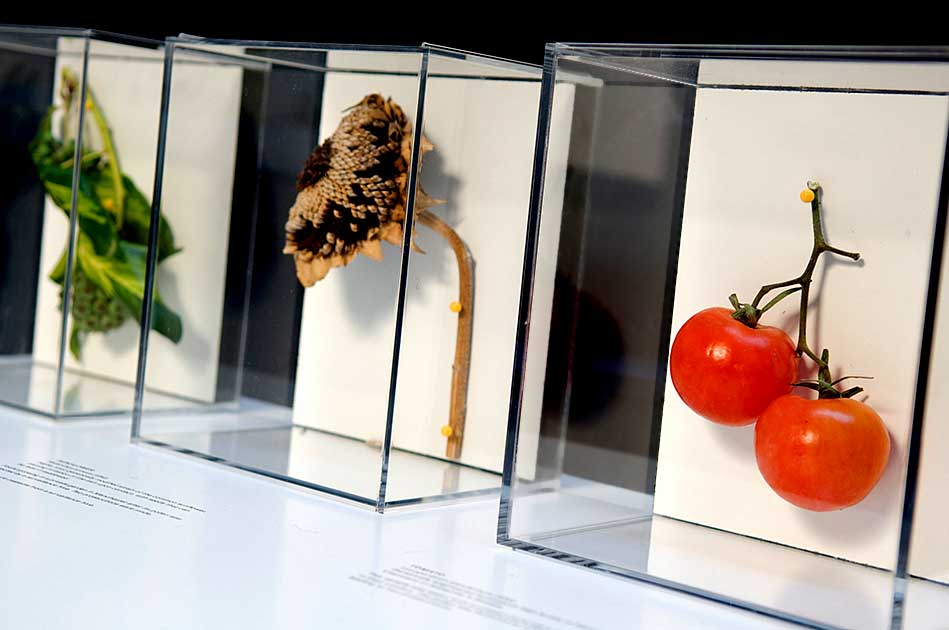
Vicia faba (Broad bean – GM)
Modified by amateurs to produce the class A controlled drug, Benzoylmethylecgonine (‘Cocaine’). Pollen from the modified plants was traced to a large crop being cultivated within three miles of a commercial farm, thus posing a serious risk of cross-pollination with food crops. Six convictions were made.
Helianthus annuus (Sunflower – GM)
Highly toxic, genetically modified strain of the common sunflower, causing irritation of the skin upon contact, with seeds that can be fatal if swallowed.
Lycopersicon esculentum (Tomato – GM)
Genetically engineered to produce high levels of Ebixam®, a patented drug used in the treatment of Alzheimer’s disease. This sample was taken from a pirated clone plant, grown illegally on an allotment in East London. Its pollen was detected by a Metropolitan Police surveillance hive, leading to two prosecutions.
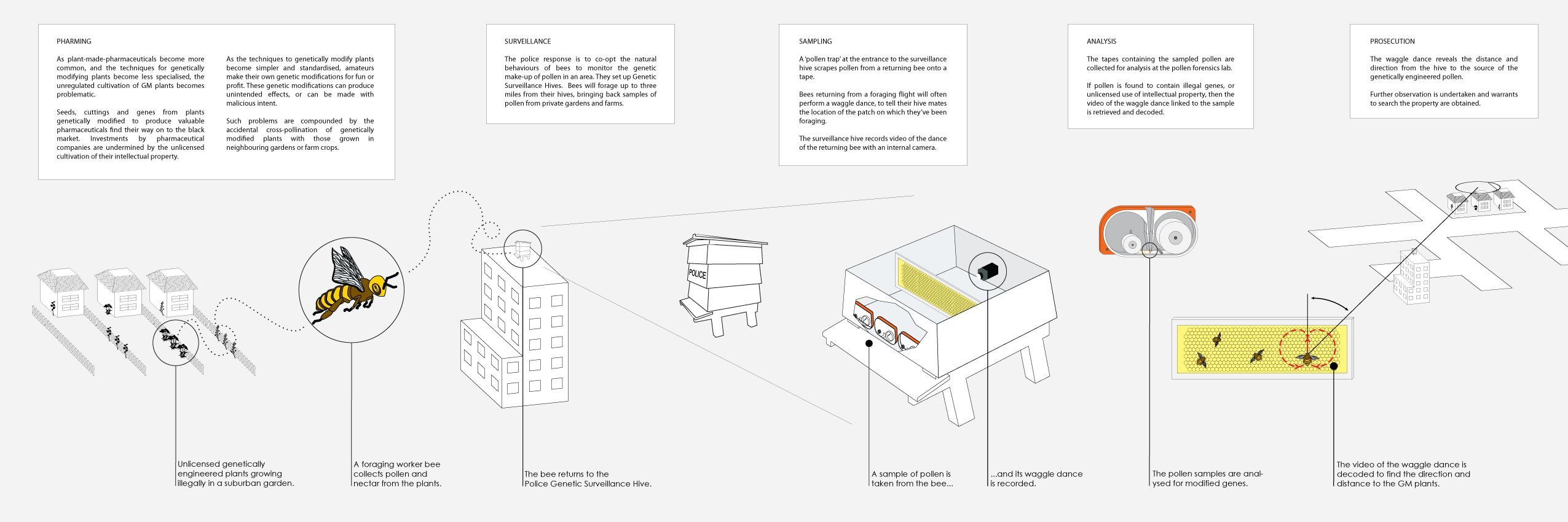
Click for a higher resolution version.
Hi,
Really interresting site with plenty of new and challenging ideas.
Nice job, thomas…
Very nice :-) When is the next project coming out?!
Nice job.
Is it possible to read the dance of bees? I would like to know where I could learn it
I just saw a story about this on the NPR website. I was amazed that i knew about this before they did from hearing about the toaster project on TED and then going and looking it up. I really think your projects are neat and i thought this one was particularly innovative and creative.
That’s great, except that pollen is part of the diet of honeybees; the health of the surveilance hives would suffer.
Truly inspiring project.
Makes one wonderwhat other technologies are being employed to surveil the public commons.
While it is true that GM technology like all others has a tremendous potential for abuse, does that make it right that the public at large must live in fear of prosecution when a bee visits their garden.
Will a copy of the plant genome in your backyard or any land that you own become part of the database that describes who you are?
What kind of ‘sting’ operation are the police planning in your backyard?…
Hello,
Such an interesting project. Makes one realize the interconnected loops we live in and the need to be so much more responsible because of that. One wrong move and the horrific domino effect begins. Love your work Thomas!
Maya
Really inspiring project with an innovative take on biology and technology